
Showing posts with label German fiction. Show all posts
Showing posts with label German fiction. Show all posts
Friday, 9 August 2024
Wednesday, 12 April 2023
The Short End of the Sonnenallee by Thomas Brussig

The Short End of the Sonnenallee
by Thomas Brussig
Translated by Jonathan Franzen and Jenny Watson
Sunday, 24 July 2022
Punishment by Ferdinand von Schirach
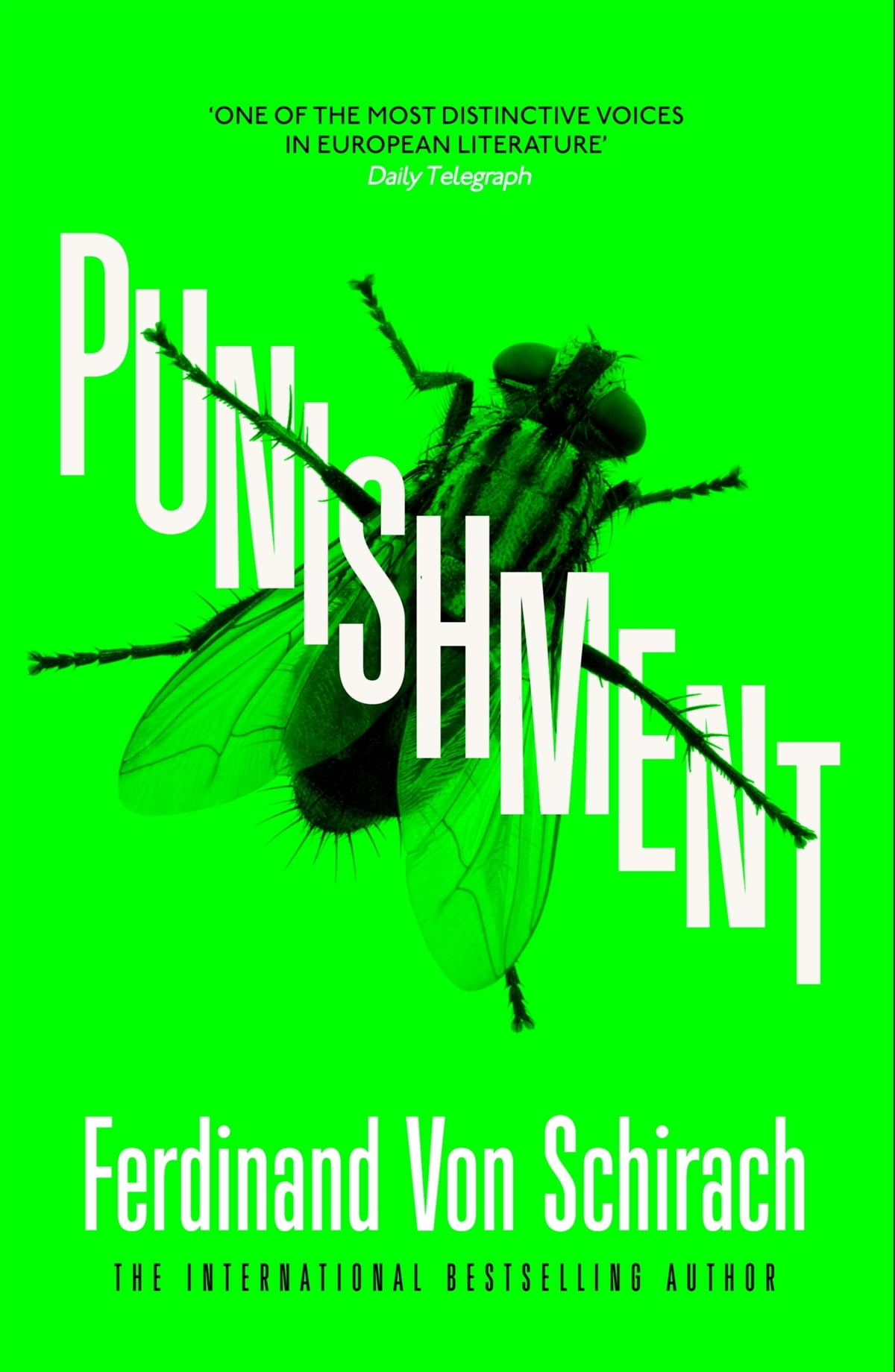
Punishment
by Ferdinand von Schirach
(translated from the German by Katharina Hall)
Saturday, 13 February 2021
The Passenger by Ulrich Alexander Boschwitz

The Passenger
by Ulrich Alexander Boschwitz
translated by Philip Boehm
Whatever I've done in the past, he thought, looks different today than it did back then, because now my humanity is called into question, because I am a Jew...
Tuesday, 19 January 2021
In Love and War: "Stella" by Takis Würger

Stella
by Takis Würger
(translated from the German
by Liesl Schillinger)
Saturday, 23 November 2019
Sins of the Father: "The Marquise of O—" by Heinrich von Kleist

"The Marquise of O—" by Heinrich von Kleist
A review of the Pushkin Classics edition
(translated from the German and introduced by Nicholas Jacobs)
Thursday, 4 July 2019
Love in the GDR: "The New Sorrows of Young W." by Ulrich Plenzdorf

Love in the GDR...
The New Sorrows of Young W. by Ulrich Plenzdorf
(translated by Romy Fursland, Pushkin Press)
Thursday, 16 May 2019
My Heart Burns: E.T.A. Hoffmann's The Sandman

My Heart Burns...
E.T.A. Hoffmann’s The Sandman (translated by Christopher Moncrieff): Tale of an Obsession
Monday, 18 March 2019
Euro Vision : The Capital by Robert Menasse (translated by Jamie Bulloch)

"The Capital" by Robert Menasse
Translated by Jamie Bulloch
A book review
Robert Menasse’s Die
Hauptstadt, winner of the 2017 German Book Prize, has recently being
published by MacLehose Press in an English translation by Jamie Bulloch. In this incarnation, the novel’s title is
rendered as The Capital. This name, of course, a faithful and literal
translation from the German, but I wonder whether it was also meant as a
tongue-in-cheek reference to Karl Marx’s epic tome. Indeed, political and economic theories also
loom large in Menasse’s Capital, except
that they are presented within the context of a zany novel about the workings
of the European Commission.
Die
Hauptstadt has been described as
the first great novel about the European Union.
It could well be the case. I
don’t profess to be some expert in Continental literature, of course, but the
only other novel I know which uses the European Commission as a backdrop is “What happens in Brussels stays in Brussels”
by the Maltese author Ġuże’ Stagno. And
that’s more a satire on Maltese politics and the Maltese representatives in the
EU, than a novel on the European institutions themselves.
Menasse’s work takes a wider view. Its central plot element is a “Big Jubilee
Project” which is being organised by the Commission as a celebration of the
anniversary of its founding. Ambitious
EU official Fenia Xenapoulou hopes that this will be an occasion to improve the
image of the Commission, whilst providing her with her big break. Fenia’s Austrian assistant Martin Susman comes
up with the noble idea of roping in Holocaust survivors, as a reminder that the
European Union was built to ensure that Auschwitz would “never happen again”. Unsurprisingly,
as the organizers will discover to their chagrin, national interests and
behind-the-scenes lobbying make the success of such an ambitious celebration
unlikely.
Much as I enjoyed this novel, I must say that it took me
some time to finally get immersed in it.
This is certainly not the fault of the translation – I’ve previously
enjoyed Bulloch’s translations of The
Mussel-Feast and Look Who’s Back,
and as in those novels, The Capital
is rendered in prose that is idiomatic and flowing. I believe the problem is more with its sheer
number of characters (a recent theatrical adaptation involved 7 actors
playing about 20 roles) – in the initial chapters especially, I thought that an
introductory dramatis personae would
have been helpful as a guide to the somewhat bewildering international cast.
Another issue is with the proliferation of seemingly
unrelated subplots involving, amongst other narrative complications: a pig on
the loose in Brussels; a retired Professor preparing to deliver a final,
memorable speech; a Holocaust survivor coming to terms with his impending
death; a number of potential, never-fully-realised love stories and, more
weirdly, a crime investigation which seems to have been borrowed from a Dan
Brown thriller. More frustratingly, some
of these loose ends are never tied up.
In other words, The
Capital is a sprawling novel which could have done with some
tightening. However, its polyphonic
narrative is, in itself, a good metaphor for the European Union, this patchwork
of nations and cultures which, somehow, managed to build a future of hope from
the cinders of a continent ravaged by war.
Indeed, this novel, despite its several comic and surreal elements,
provides Menasse with the springboard to present his views on the European
Union. Despite the evident shortcomings,
the bureaucracy and the backstabbing which seem to characterize the working of
its institutions, especially the Commission, the central idea(l) of the EC remains
a laudable one – the creation of a supra-national body to keep extreme
nationalism in check, in order to ensure that the horrors of the 20th Century
do no happen again. In the age of
Brexit and strident populism, its themes urgently relevant.
Kindle Edition, 432 pages
Published February 21st 2019 by MacLehose Press
***
Auschwitz – Never Again, is the mantra that underlines Menasse’s The Capital,
revealing an earnest and burning message at the heart of what might seem ‘just’
a comic romp. That is why I have no qualms
about pairing this novel with a cult work by Polish composer Henryk Górecki (1933-2010) –
his Third Symphony, also known as “The Symphony of Sorrowful Songs”. Premiered
in April 1977, the symphony marked a clear departure from the composer’s usual
dense and avant-garde style, in favour of a modal and emotionally direct
language. Its second movement sets a prayer
scrawled by an 18-year old prisoner on the wall of a Gestapo camp in Zakopane. This video is taken from the documentary Holocaust,
featuring a performance recorded at Auschwitz.
Harrowing doesn’t start to describe this.
Saturday, 9 March 2019
Venice by night: Friedrich Schiller's "The Ghost-Seer" (translated by Andrew Brown)

Venice by Night... "The Ghost-Seer" by Friedrich Schiller
(Alma Classics edition, translated with an introduction by Andrew Brown)
The rise of Gothic fiction in the second half
of the 18th Century, also referred to as “first wave Gothic”, is generally
portrayed as a peculiarly English phenomenon.
This is hardly surprising, considering that the novel widely (if not
uncontroversially) considered to be the first Gothic novel is Horace Walpole’s The
Castle of Otranto (1764). It
set the blueprint for a dark literary genre, obsessed with terror, death and
the otherworldly, and was soon followed by works in the same vein by other
English authors such Ann Radcliffe, William Beckford and Matthew “Monk”
Lewis. It would be a mistake, however,
to consider this movement in ‘splendid isolation’ from what was happening in
the rest of Europe. Indeed, some of the
defining elements of the Gothic are shared with Continental literature of the
period, shaped by the ideals of Early Romanticism and the proto-Romantic Sturm
und Drang movement. German readers,
in particular, had a particular appetite for horror novels, some of which were
translated into English or adapted by English authors. In writing “The Monk”, Lewis drew upon
homegrown Gothic, but also upon German ‘horrid novels’.
One of the seminal works in the Continental
canon is Der Geisterseher – Aus den Papieren des Grafen von O** (generally rendered in English as “The Ghost-Seer” or “The Apparitionist”), a strange novel by the poet, dramatist, novelist and philosopher Friedrich Schiller (1759-1805). It first appeared in instalments in the
journal Thalia between 1787 and 1789, only to be abandoned and left unfinished
by Schiller who, apparently, developed a great antipathy to his own creation. It has just been published on the
Alma Classics imprint, in a translation by Andrew Brown who also provides an
introduction, placing the novel in the philosophical and cultural context of
its period.
The protagonist of the novel is the Prince of
------------------ who, we are given understand, is the third in line to the
throne of Protestant state. On a sojourn
in Venice, the Prince becomes involved in a secret society known as the
“Bucentauro”, a group of debauched members of high society, amongst whom count
several influential prelates. He also
falls in love with a mysterious “Greek” woman.
All of this, however, could well be a front for an even shadowier
Catholic group intent on converting the Prince to “the only Church outside
of which there is no salvation”, fleecing him of his family’s riches in the
process. The Prince is, in fact, being
stalked by an elusive figure he refers to as “the Armenian” who is, according
to some accounts, a protean spy for the Inquisition and, according to others, a
Faust or Melmoth-like figure who has achieved immortality through devilish
means.
 |
| Arthur von Ramberg (1819-1875), Der Prinz (illustration for Schiller's The Ghost-Seer) |
It all sounds very convoluted, and it is. On his part, Schiller purposely adds to the
confusion through the narrative devices he opts for. The first part of the story is recounted in
the first person by the Count of O***, a friend and companion of the Prince. After the Count leaves Venice to attend to
personal business, the story continues in epistolary form, through letters sent
by Baron von F_________ , a member of the Prince’s retinue, to the Count,
updating him on the latest developments in connection with the Prince. Both narrators are, by their own admission,
unreliable narrators, who do not always understand the strange goings-on in
which they find themselves. The
narrators cannot trust their senses – we, as readers, cannot take them at their
word. This is truly a novel where, to
quote the Bard, “nothing is, but what is not”.
The work’s fragmentary nature is compounded by the fact that it was left
unfinished. Reaching the last page
of book feels like stepping out of a
dream or hallucination, whose details and meaning lie tantalisingly out of
reach.
The philosophy behind “The Ghost-Seer” is also
curiously ambivalent. It is often held
up as an example of Schiller’s Enlightenment ideals – to me, this is not that
obvious. Take the author’s approach
towards the supernatural. On the one
hand, much of the novel’s atmosphere (and its title) is drawn from the
otherworldly aspects of the plot, with one of its key scenes a seance-like
occult ceremony presided by a shady character based on the Count of
Cagliostro. Subsequently,
Radcliffe-like, Schiller has his Prince unravel the supernatural elements,
revealing them to be mere smoke and mirrors.
Yet, the explanation is so complicated, that like the Count, we are
almost tempted to reject it in favour of a belief that something otherworldly
must have been going on. The same could
be said of Schiller’s attitude towards religion. Unsurprisingly for a Gothic novel, Catholics
get quite a lot of bad press. But Schiller seems equally critical both of
the drearier, stricter strains of Protestantism and, at the other extreme, of ‘freethinking’ unbelief.
For an unfinished, slim novel(la), The
Ghost-Seer has proven surprisingly influential, possibly because of the
questions it poses only to leave unanswered.
It gave rise to a particular sub-genre of the Gothic – the “secret
society novel”, variously referred to in German as the Bundesroman or
the Geheimbundroman. It is also one of the first works to exploit
Venice as a backdrop for dark and/or supernatural fiction, a tradition which continued with E.T.A.
Hoffmann, Heinrich Zschokke and in the 20th century, Thomas Mann and Daphne du
Maurier. La Serenissima it may be
called, but its alleys and canals, decaying palaces and hidden campielli
whisper strange secrets, if only one were to listen...
 |
| Friedrich Nerly, View of the Grand Canal |
***
Schiller’s
An die Freude was famously set to music by Ludwig van Beethoven in the
choral finale of his 9th Symphony. Apart
from that, however, there are few famous settings of his poetry, although one
should mention Franz Schubert’s forty-four lieder based on Schiller’s
poems.
On the other hand, the writer’s plays have
proven particularly popular in opera adaptations. Verdi was a particular fan: I Masnadieri is based on The
Robbers, Giovanna d’Arco on The Maid of Orleans, Luisa Miller on Intrigue
and Love, Don Carlos on the eponymous play and La Forza del Destino,
partly, on Wallenstein.
Here’s then, a Schiller musical “dessert”,
First on is a scene from the Third Act of I Masnadieri,
the work which, together with The Robbers, is most often cited as an example
of Schiller’s “Gothic” streak.
Gioacchino Rossini is best known for his comic operas.
However, his last theatrical work, Guillaume Tell based on Schiller’s Wilhelm
Tell, is a grand opera rich in Romantic ideals, including several “nature scenes”
reflecting the concept of the Sublime.
To end, a contemporary
work by composer and cellist Graham Waterhouse. Composed in 2005, Der Handschuh is a melodrama
for cello and speaking voice, composed to mark the 200th anniversary of Schiller’s
death.
Thursday, 30 August 2018
Grim(m) tale? The Jew's Beech by Annette von Droste-Hülshoff

The Jew's Beech by Annette von Droste-Hülshoff
Annette von Droste-Hülshoff (1797-1848) was
born into an aristocratic Catholic family near Munster and spent most of her
life in rural Westphalia. She never married and rarely tasted city life. This
notwithstanding it appears that she was well aware of the prevailing literary
trends of the day and her apparently "limited" life experiences did
not stop her from exploring deep philosophical issues in her works.
Take this strange novella - "The Jew's Beech". It is, ostensibly, a murder mystery inspired by true events - the unsolved murders of a forester and a Jewish moneylender - which were recorded in the archives of the author's family. The story itself however is just a pretext for an exploration of such themes as good and evil, the corruptibility of young minds and the stifling prejudices which, in a small community, can cloud the minds of even the best of people.
Annette von Droste-Hülshoff was primarily a poet and Die Judenbuche is her only piece of prose. For better or for worse, it is very much a poet's work. Let's start with the weaknesses first. A master storyteller could have made a nail-biting thriller out of this. Von Droste-Hülshoff however seems blissfully unconcerned about narrative conventions. Many facts are left unexplained, new characters appear with barely an introduction, the structure sometimes feels lopsided with flashbacks and flashforwards. Then there is the famously obscure ending, which lends itself to multiple interpretations and raises more questions than it answers. It leaves one wondering whether the author was being consciously obscure - a proto-(post)modernist, if you will - or whether she was merely unable to tie up the plot's loose ends.
But in the novella's weaknesses lie also its strengths. The work is rich in allusion and metaphor - chief amongst them the striking image of the lone beech tree of the title. Although the book is firmly rooted in reality, the atmosphere conjured up by the novella is straight out of Brothers Grimm - magical forests, eerie apparitions and unsettling premonitions abound. Indeed this has been justly described as a "Gothic" work - it has many of the genre's tropes and is close in style to the literature of the "Uncanny" exemplified by Hoffmann and like-minded authors.
 |
| Alma Classics edition cover |
English editions of this novella are rare. The Oneworld Classics edition I read (now reissued as part of the Alma Classics series) uses the 1958 translation by Doris and Lionel Thomas and includes an introduction and timeline.
It may not be "entertaining" in the usual sense of the word and is ultimately frustrating as a murder mystery, but this strange work is certainly worth reading.
Subscribe to:
Posts (Atom)


