
Showing posts with label classical music. Show all posts
Showing posts with label classical music. Show all posts
Monday, 4 May 2026
Wednesday, 29 June 2022
The Northern Silence: Journeys in Nordic Music & Culture by Andrew Mellor

The Northern Silence
Journeys in Nordic Music and Culture
by Andrew Mellor
Tuesday, 8 March 2022

Saturday, 25 September 2021

Sunday, 2 May 2021
"The Life of Music: New Adventures in the Western Classical Tradition" by Nicholas Kenyon

The Life of Music:
New Adventures in the Western Classical Tradition
by Nicholas Kenyon
Wednesday, 31 March 2021
"Judas: The Troubling History of the Renegade Apostle" by Peter Stanford

Judas
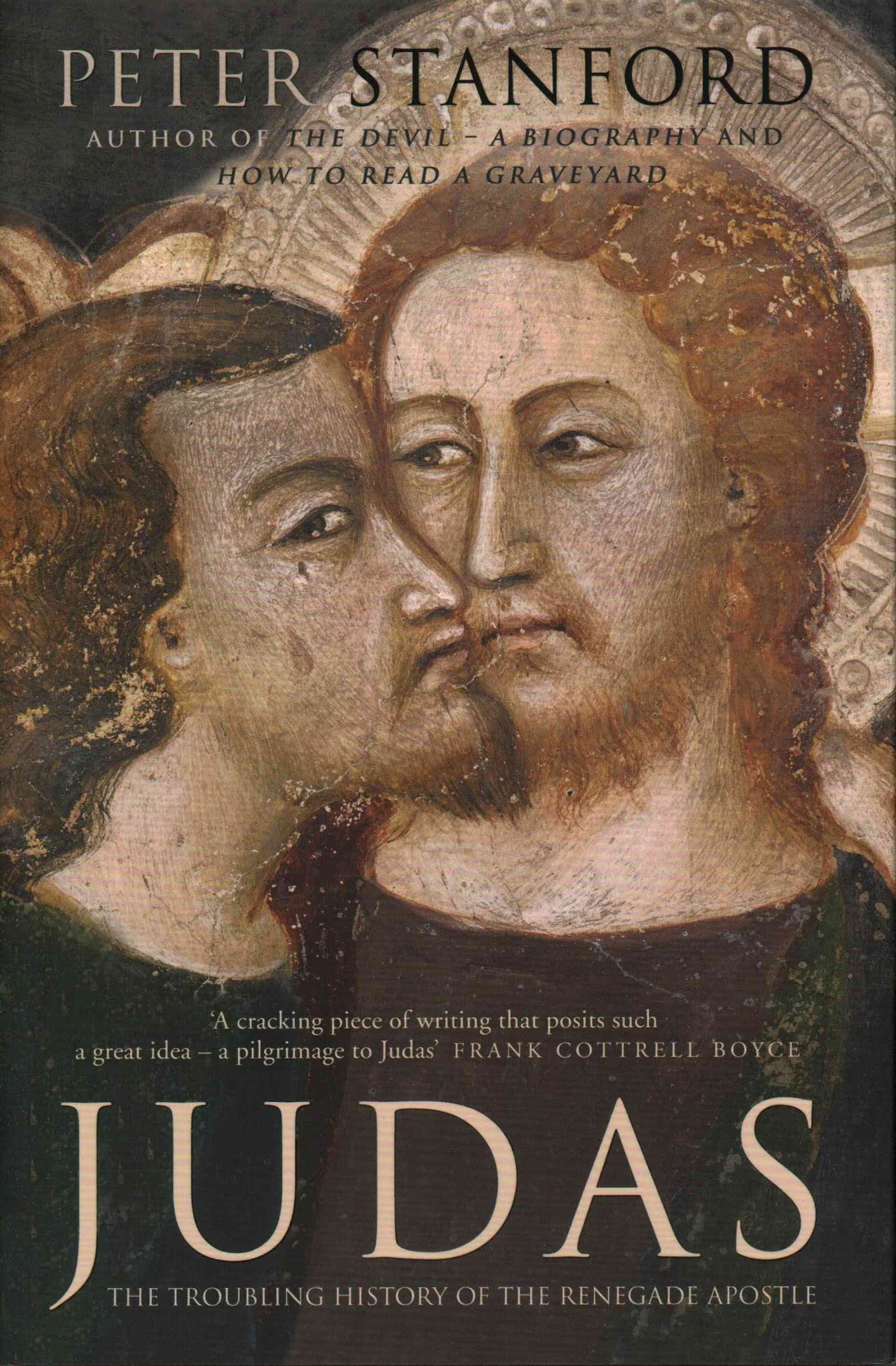
The Troubling History of the Renegade Apostle
by Peter Stanford
A book review
Sunday, 28 February 2021
The Little Devil and Other Stories by Alexei Remizov

The Little Devil and Other Stories
by Alexei Remizov
Translated by Antonina W. Bouis
Sunday, 25 October 2020
The Bell in the Lake by Lars Mytting

The Bell in the Lake

Lars Mytting (Translated by Deborah Dawkin)
________________________
Sunday, 28 June 2020
"Fantastic Tales" by Iginio Ugo Tarchetti

Fantastic Tales
by Iginio Ugo Tarchetti
(translated by Lawrence Venuti)
A review
Saturday, 27 June 2020
"La Quinta Sinfonia di Beethoven Recensita da E.T.A. Hoffmann" by Benedetta Saglietti

La Quinta Sinfonia di Beethoven Recensita da E.T.A. Hoffmann:
Nel Regno dell'Infinito
by Benedetta Saglietti
A review
Tuesday, 9 June 2020
"Three Apples Fell from the Sky" by Narine Abgaryan

Three Apples Fell from the Sky
by Narine Abgaryan
(translated by Lisa C. Hayden)
A review
Monday, 25 May 2020
"Wagner's Parsifal: The Music of Redemption" by Roger Scruton

Wagner's Parsifal:
The Music of Redemption
by Roger Scruton
An illustrated review
Thursday, 9 April 2020
Andrés Barba's "A Luminous Republic"

A Luminous Republic
by Andrés Barba (translated by Lisa Dillman)
A review
Sunday, 18 August 2019
Adventures in Grinlandia. A review of "Fandango and Other Stories" by Alexander Grin

Adventures in Grinlandia
"Fandango and Other Stories"
by Alexander Grin
(translated by Bryan Karetnyk)
A review
Sunday, 23 June 2019
Go West : Sophie Hardach's Confession with Blue Horses

Go West
Confession with Blue Horses by Sophie Hardach
A book review
Thursday, 16 May 2019
My Heart Burns: E.T.A. Hoffmann's The Sandman

My Heart Burns...
E.T.A. Hoffmann’s The Sandman (translated by Christopher Moncrieff): Tale of an Obsession
Wednesday, 1 May 2019
Whale of a Tale: "The North Water" by Ian McGuire

Whale of a Tale...
"The North Water" by Ian McGuire
A book review
Thursday, 18 April 2019
Holy Week, Unholy Murders: Red April by Santiago Roncagliolo

Red April by Santiago Roncagliolo
A book review
How best to express the horrors of a bloody civil war whose memory is still painful? How can one probe into wounds which are still open and smarting? An answer might be provided by literature in general, and genre literature in particular. One could cite as an example Carlos Ruiz Zafon’s “Cemetery of Forgotten Books” series, haunted by the memories of the Spanish Civil War. Zafon’s bestselling novels have shown that how the Gothic, so often dismissed as ‘mere’ entertainment, can successfully engage with and comment on troublesome recent history.
Peruvian
writer and journalist Santiago Roncagliolo did something similar with his crime
thriller Red April (Abril Rojo),
originally published in Spanish in 2006 and subsequently in an English rendition by veteran translator Edith Grossman (it won the Independent Foreign Fiction Prize for 2011).
The civil war which acts as a backdrop to the events in this book is the armed conflict in Roncagliolo’s native country between the Government, the Communist Party (also known as Sendero Luminoso or Shining Path) and the Tupac Amaru Revolutionary Movement. The conflict started in 1980 and has been largely dormant since 2000, albeit with occasional resurgences of violence.
The plot unfolds around the period of the presidential elections before Holy Week in the year 2000. In the context of this campaign, the Government is keen to make a statement that communist insurgents have been defeated. However, during Carnival in the town of Ayacucho, a gruesome murder raises suspicions that Sendero Luminoso might once again be rearing its head. Associate District Prosecutor Félix Chacaltana Saldívar investigates the matter and prepares a convoluted report which conveniently makes no mention of terrorism. And, possibly for this very reason, when this murder is followed by others, all bearing the stamp of a deranged serial killer or ritual murderer, the authorities assign the case to none other than Chacaltana. He is hardly the ideal detective but, in the eyes of his seniors, appears to be an official who can be easily manipulated.
As evidenced by
the style of the legal reports spread throughout the text, Chacaltana is well-versed
in the letter of the law which he tries to follow with pedantic
conscientiousness, but this hardly equips him for the complexities of life and
for the intricacies of the tense political climate of his country. Abandoned by his wife and
obsessed with the memory of his long-dead mother, the Prosecutor is often naïve
and ingenuous, reminding me of Umberto Eco’s claim that “real literature is about losers”. Perhaps for this very
reason, the novel’s protagonist brought to my mind failed journalist Colonna in
Eco’s own Numero Zero or, to cite another Italian novel, Paolo Laurana in Sciascia’s
A Ciascuno il Suo, hapless figures who end up embroiled in matters beyond their
ken. Over the course of the novel, Chacaltana starts to wise up, and this change
is not all to the good. Indeed, some
unsavoury aspects of his character come to the fore and contributed to some of
my dissatisfaction with what is an otherwise engrossing book.
As a crime novel, Red April is thrilling
and intriguing. Much of its dark feel is
given by the elements it borrows from the horror – and particularly the folk
horror – genre. Indeed, we start to
realise that the serial killer is borrowing imagery both from Christian traditions
linked to Holy Week and from pagan Andean myths and rituals. An underlying theme of the novel, is the friction
between Andean/pre-Colombian culture (as represented by the Quechua-speaking “natives”)
and the subsequent Christian traditions imported by the Spanish-speaking
settlers. It is suggested that underneath the veneer of
Christian ritual, the old rites have never died out. The language/culture barrier becomes a symbol
of this perennial conflict, which seems to fuel present-day violence. As one of the characters puts it:
Ayacucho
is a strange place. The seat of the Wari
culture was here, and then the Chanka people, who never allowed themselves to
be subjugated by the Incas. And later
were the indigenous uprisings because Ayacucho was the half-way point between
Cuzco, the Inca capital, and Lima, the Spaniards’ capital. And independence in Quinia. And Sendero. This place is condemned to be bathed in blood
and fire forever.
Some readers have been put off by the
very graphic murders. To be honest, however, an act of senseless sexual violence
towards the end disturbed me much more than the admittedly gruesome crime scene
descriptions. Plot-wise, the solution to the “whodunit” is
rather too convenient – I believe that this is a novel which is best enjoyed by
soaking up its dark atmosphere tempered by a streak of black humour.
Paperback, Atlantic Cult Classics, 273 pages
Published 2018 by Atlantic Books (first published 2002)

Being a fan of Jan Garbarek, the references to the Quechua culture could
not but remind me of the great saxophonist’s collaboration with the Hilliard
Ensemble and their recording of Quechua Song. It seems ironic however to
represent this native culture through a piece European jazz, particularly in
the light of the themes of Roncagliolo’s novel. So here’s what is
hopefully a more “authentic” rendition of the Quechua song “Munasqetay”.
One
of the traditional instruments of Peru is the charango, a guitar-like instrument
which is a descendant of the vihuela a mano imported by the Spanish conquistadores. Its use in Peruvian folk music
epitomises the sometimes uncomfortable but always intriguing mix between native
and “European” elements. Here’s Jamie Guardia, one of
the Peru's foremost singers and players of the charango in a song named,
appropriately, Adios Pueblo de Ayacucho.
Gabriela
Lena Frank is an American classical pianist and composer whose mother is a Peruvian
of Chinese descent. Some of her works celebrate
her Peruvian family heritage. Apu – Tone
Poem for Orchestra, commissioned by the Carnegie Hall, is inspired by Andean
mythology. The apu is one of the spirits
which keep a watchful eye on travellers passing through highland roads.
As it
happened, I read this book in March/April, the months in which the novel is set,
and this helped me to get into the atmosphere of the book. Indeed, although I live on the opposite side
of the world, I could feel an affinity to the descriptions of the Holy Week
pageantry and, particularly, the crowded processions with the statues showing
Passion scenes. And so I’d like to end
with a funeral march such as are typically heard in Mediterranean countries –
and more specifically, Malta – during this time of year. The march is accompanied by shots of local
processions, not far removed from what is portrayed in Roncagliolo’s novel.
Sunday, 24 February 2019
Tall Tales: "A review of Once Upon a River" by Diane Setterfield

"Once Upon a River" by Diane Setterfield
A book review
Once upon a time, there was an author who wrote
stories, really good stories. She loved stories so much that she wrote a novel
about them – about the way in which stories mould our world, fashion our
thoughts, shape our past and help us fathom our present; about the way in
which, like a living being, tales change and grow at each retelling; about how
each and every one carry stories in our hearts, whether we choose tell them or not...
Diane Setterfield’s third novel Once Upon a River
is an ambitious and complex work, but one which wears its erudition lightly and
hides its artifice well. At one level,
in fact, it can be enjoyed as a well-crafted historical mystery. We are in the 19th Century, on the evening of
a winter’s solstice. The door of The
Swan, an inn at Radcot on the River Thames, opens to reveal a badly injured man
carrying a little girl. She’s seemingly
dead – Rita, the local nurse and midwife, can detect no breath or
heartbeat. Yet, against all odds, the
girl revives and wakes up, whether by magic, as a result of a miracle or
through some natural wonder. This does
not solve the enigma of the girl’s identity, which cannot be easily ascertained
especially since she turns out to be mute.
The girl could well be the daughter of the Vaughans, kidnapped two years
previously finally returned by her captors.
Or the illegitimate granddaughter of a local farmer, abandoned by her
mother before she committed suicide on being forced into prostitution. Or, if one is to believe Lily, the parson’s
housekeeper, she might be a revenant, the ghost of Lily’s long-dead
sister.
This mystery lies at the heart of the novel and makes a page-turner out of it, particularly in the rather breathless final
chapters. Setterfield houses her story
in a well-researched historical context which is conjured through loving descriptions
of the Thames and its communities, and through references to the new scientific
worldview which was then challenging more conservative religious and
supernatural views. The story is peopled
by interesting characters, including farmer Robert Armstrong, the dark-skinned
illegitimate son of an earl and a housemaid; strong-willed Rita, a self-taught
scientist; and Henry Daunt, who is actually based on the real-life Henry Taunt,
photographer and chronicler of the Thames.
Setterfield also subtly evokes the period through references to the
literature of the time – echoes of Dickens and, to my mind at least, Wilkie
Collins, abound.
All this would have been enough to make of the novel
a considerable achievement. But Once
upon a River is also a post-modern piece of meta-fiction. This insightful review on the Opinionated Reader blog makes the valid point that the novel purposely includes familiar tropes of British Gothic
literature, particularly the river and the inn.
This is very true – the Thames, in particular, could be considered
not just a setting but a central character in the book, whereas the Swan is the
place where the novel starts and ends.
But the novel is also rich with other references to legends and folklore. Key scenes occur on the winter and summer
solstice and the Autumn equinox; there are mentions of dastardly highwaymen, water
sprites, goblins, ghosts, changelings, clairvoyants. And even though most of the supernatural
aspects of the tale can be (but are not necessarily) rationally explained (Ann Radcliffe-style), the otherworldly is never too far too seek. Setterfield also throws her net wider than the reaches of British folklore – the figure of Quietly, the ghostly ferryman, owes as much to
Classical mythology as to the classic English ghost story, and the motlew crew
at the Swan act as a more modest version of a Greek chorus.
What is impressive, at the end of the day, is that
all these knowing references are presented in an intriguing and involving story
worthy of the classic 19th century novelists.
True, it’s a tall tale, and some of the loose ends are perhaps too
conveniently tied up at the end. But, we don't really mind... Like the patrons of the Swan, we all love a great story, don’t we?
Hardcover, 464 pages
Published December 2018 by Transworld Publishers/Random Books
 |
| Henry Taunt at Marsh Mills, Henley |
***
As listening suggestions to accompany this novel, I
would like to propose some works of classical music by English composers
inspired by the river. George Frideric
Handel’s Water Music, composed in 1717 for a concert on the Thames,
immediately came to mind, but their stately grandeur did not seem to fit the
mood of the novel. So I will start with
a contemporary piece – Thames Reflections by Clive Jenkins (b. 1938) premiered
by the Chamber Ensemble of London at a concert celebrating music and composers
associated with the Thames
Summer Night on the River was composed by Frederick Delius in 1911. It is a rather ironic choice, given that it
was not inspired by an English river but by the French river Loing. It is, however, a lovely piece, evoking
mysterious mists shimmering above the water.
In
his three Parables for Church Performance, Benjamin Britten combined
elements of the Japanese noh plays with English medieval “mysteries” to
create a new yet timeless music theatre form.
Curlew River, the first of the set, is based on Umidagawa (Sumida River) by Juro Motomasa (1395–1431),
which Britten saw during a visit to Japan and the Far East in early 1956. His librettist, William Plomer, moved the
setting of the original to the fictional Curlew River in East Anglia. This ‘church opera’, rather surprisingly, reflects
some elements found in Setterfield’s novel, including a mysterious Ferryman, a woman
looking for her lost child, and the ghost of a dead boy. Here’s the
ritualistic opening of the work, taken from a recording conducted by the composer himself.
Despite its very English setting Once upon a
River also harnesses images from Greek mythology. And so a Greek river is next : Lethe one
of the five rivers which flowed through Hades where all those who drank from it
experienced complete forgetfulness. It
is evoked in the last movement of Arcadiana, a work for string quartet
by Thomas Ades, written when the precocious composer was still in
his early twenties.
And if you’d like to explore the other movements of
this wonderful composition, do start with the meltingly beautiful O
Albion. To save you looking for it,
here it is in a live version performed by Ensemble Perpetuo. It was recorded during a concert appropriately
themed Rivers and Oceans, bringing us back to where it all started...
Saturday, 9 February 2019

Subscribe to:
Posts (Atom)


