
Showing posts with label Nordic Fiction. Show all posts
Showing posts with label Nordic Fiction. Show all posts
Saturday, 23 December 2023
Sunday, 25 October 2020
The Bell in the Lake by Lars Mytting

The Bell in the Lake

Lars Mytting (Translated by Deborah Dawkin)
________________________
Sunday, 29 September 2019
Nordic chill. “A Fist or a Heart” by Kristín Eiríksdóttir

“A Fist or a Heart”
by Kristín Eiríksdóttir
Translated by Larissa Kyzer
A review
Tuesday, 8 January 2019
Stockholm, 1793 - a review of "The Wolf and the Watchman" by Niklas Natt och Dag

Stockholm, 1793
"The Wolf and the Watchman" by Niklas Natt och Dag
(translated by Ebba Segerberg)
A book review
James Vella-Bardon, Maltese author of “The Sheriff’s Catch”
(which I review here) has publicly declared that he does not like his novel
described as a work of “historical fiction”, despite the fact that it is set in
the 16th Century. According to him, the
term historical fiction could have negative connotations for some readers,
who might be led to expect a soporific period piece, rather than a vibrant and
engaging story. And so, “The Sheriff’s
Catch” should be called a historical thriller, thank you very much.
Whether one agrees with Vella-Bardon or not, it is
certainly true that one of the greatest challenges faced by writers inspired by
the past, is how to give that historical context an immediacy and authenticity
which can grip the imagination of the contemporary reader. “The Sheriff’s Catch” succeeded brilliantly
in this. The same can be said of “The
Wolf and the Watchman”, a wonderful historical mystery which ended my 2018
reading year with a bang.
Originally published in Swedish as “1793”, Niklas Natt
och Dag’s debut novel will soon be available in English in an idiomatic
translation by Ebba Segerberg. And it
has all the makings of a literary bestseller. The story is set in Stockholm in the late
18th Century. Europe is still in awe of
the revolutionary goings-on in France and, following the assassination of
Gustav III, revolutionary fervour in the Swedish city is tempered by a sense of
fear and dread as to what might happen if matters get out of hand. In this incendiary environment, Mickell Cardell, a one-armed ex-soldier and
night watchman, makes a grisly find.
Somebody has disposed of a body in the city’s lake – and it is a body with
excised limbs and gouged eyes, testifying to a slow and painful death. This is the type of crime whose investigation
the Head of the Stockholm Police can only assign to a trusted person – and that’s
Cecil Winge, a lawyer with progressive ideals who is battling the last stages
of consumption. Winge teams up with
Cardell and together they attempt to crack the case. Their fraught journey will take them through
all layers of Stockholm society, from the lowest classes to the supposed elite
of the city, who also have their dark and base secrets.
In a
virtuoso feat of storytelling, Niklas Natt och Dag introduces two further
strands in his tale, which are presented to the reader in reverse chronological
order. First there is the epistolary
account of Kristofer Blix, a handsome young man who moves to Stockholm with the
dream of becoming a doctor. Then there
is the story of Anna-Stina, sent to a dreary workhouse after being wrongly
accused of working as a prostitute. In
the final chapters, these three threads combine to create a satisfying finale. Some plot twists are rather too convenient,
but the momentum is such that one gladly suspends disbelief.
 |
| View of Stockholm, late 18th Century |
So why is The Wolf and the Watchman good “historical
fiction”? First of all, the setting is no mere “appendage”
to the story – the beliefs, ideals and way of life of the period fuel both the
plot and the characters’ motivations and thought processes. Secondly, the historical
context is authentic, not simply in the sense of being well-researched (though
it seems to be that as well), but more importantly in that the novel places us
soundly in the period it is describing. Indeed, the descriptions do not shy away from the
revolting – whether stench, disease or bodily fluids. In this respect, a warning to the fainthearted
is in order – the novel can be very graphic and I must admit to skipping a
couple of paragraphs and reading others whilst peeping between my fingers. It
can be dark, it can be bleak, but it certainly cannot be accused of presenting
the past with nostalgic, rose-tinted hues.
At the same time, I liked the fact that the author plays
around with the genre. The Wolf and the
Watchman presents elements of the “police procedural” and, in its use of an
investigating duo combining brain and brawn, it pays tribute to classic
detective fiction. There is also a
strong noir element – the customers
of smokey nightclubs and striptease joints replaced by the tobacco-chewing
patrons of Stockholm pubs and coffee-houses. And, to the great pleasure of yours truly,
there is more than a whiff of Gothic in some of the darker pages of the text.
1793 was voted best debut novel of 2017 by the
Swedish Academy of Crime Writers. It's a deserved win and, hopefully, its English translation will bring it to the attention of a wider audience.
Expected publication: February 7th 2019 by John Murray
***

Although set in Stockholm, The Wolf and the Watchman is largely by the events of the French
Revolution. Winge upholds the Enlightenment ideals
supposedly reflected in the insurrection but has his reservations about the
bloodbath which followed. In France, the
Revolution had an impact on the arts, not least on music. It was a catalyst in the rise of
revolutionary “street music”, of which the most lasting legacy is La Marseillaise, later adopted as the
French national anthem.
The violence unleashed by the Revolution however cast a
pall over its legacy (although, perhaps, not as much as one would have expected). The guillotine, in particular, became a
potent symbol of the Reign of Terror and seemed to haunt the psyche of the
nation. This is particularly evident
Alexandre Dumas’s relatively little-known collection of supernatural tales – A Thousand
and One Ghosts. Musically, it finds a
parallel in March to the Scaffold the
fourth movement of Hector Berlioz’s Gothic extravaganza Symphonie Fantastique. (about which you can read more here).
The guillotine makes another famous appearance in
classical music in the final scene of Francis Poulenc’s Dialogues des Carmelites which presents a
fictionalised account of the execution by guillotine of the “Martyrs of Compiègne”
during the closing days of the Reign of Terror.
Revolutionary trends were rife in other countries,
leading to the disenchantment with Gustav III of Sweden and his eventual assassination. Whatever faults Gustav had, he is deservedly
lauded as a patron of the arts. The
Royal Theatre was built under his auspices, and his support of opera composers
led to a school of opera still referred to as Gustavian opera. Johann Gottlieb Naumann was one of these
composers – he is known amongst others for his “lyric tragedy” Gustaf Wasa,
written to a libretto by Johan Kellgren based on a concept of Gustav III
himself.
It is therefore ironic that the assassination of Gustav
III should itself become the subject of opera – and more than one at that. Daniel Auber’s Gustave III appeared in 1833. It was followed, more famously, by Giuseppe
Verdi’s Un Ballo in Maschera. Composed in 1859, censorship requirements
in Rome and Naples forced Verdi to change the
setting several times, amidst the censors’ fears that a royal assassination relatively
close to home was an unsavoury subject for a theatre piece. Clearly, Gustav III was not the only royal to
live in the grip of paranoia...
Sunday, 23 September 2018
Horror Autofiction? "I Always Find You" by John Ajvide Lindqvist
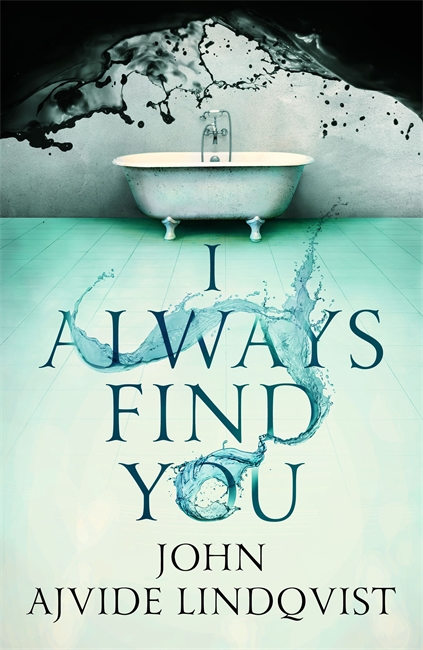
Horror Autofiction - "I Always Find You" by John Ajvide Lindqvist
A review
Some years back I had enjoyed - with some
reservations - Lindqvist's first and best novel "Let the Right One
In". It was that which led me to try his latest book to be published in
English (in a translation by Marlaine Delargy) - I Always Find You - the second
instalment in the "Places" trilogy. Unfortunately, it left me with a
sour taste, a reminder that in-your-face horror is, alas, not for me... Which,
of course, does not mean that there's not much for others to enjoy in this
book.
Lindqvist has often been compared to Stephen King and one can see certain parallels with the American master of horror. Lindqvist is as much concerned with the realist/social aspects of his story as with the supernatural ones. In this case, the protagonist-narrator is a fictionalised version of the author himself, who is recalling events which occurred in 1985, as well as a disturbing incident from some years before that. In the mid-80s, the narrator/author was just 19 years old and starting out as a young showman/magician. He moves into a small and decrepit flat in a run-down apartment complex in Stockholm and the 'horrors' he has to face are the very real daily challenges faced as a teenager coming to terms with adult life. A novel does not need to go far back to count as convincing historical fiction and, in this case, judiciously-placed cultural and historical references (Depeche Mode, skinheads, the assassination of Olof Palme) take us, very effectively, back to 80s Stockholm. One also gets the impression that mixed with the distaste for the sordidness which city life could bring, there's also a vague sense of nostalgia.
The supernatural elements start, literally, with drainage problems. The apartment condomini share a communal laundry and bathroom and, out of the blue, an out-of-order sign appears on the bathroom door. Soon after, cataclysmic and ominous signs manifest themselves - birds fall out of the sky, John suffers from a constant claustrophobic feeling and the neighbours start behaving strangely. And the bathroom seems to beckon.
What follows is hard to describe without giving away much of the plot. And so I will leave any intrigued readers to discover for themselves the strangeness which lurks in the cover's bathtub. Suffice it to say that it is both splendid and bizarre, and evidence of the author's wild flights of the imagination. However, it also leads to some bloody and, at least to me, repulsive scenes and it is here that the book started to lose me.
Lindqvist manages to give even the more outlandish aspects of his book a social and political underpinning. It is an interesting approach even it sometimes gives rise to rather preachy monologues.
Overall, a mixed bag, which gives a horror twist to the "autofiction" genre.
Published September 20th 2018 by riverrun
Lindqvist has often been compared to Stephen King and one can see certain parallels with the American master of horror. Lindqvist is as much concerned with the realist/social aspects of his story as with the supernatural ones. In this case, the protagonist-narrator is a fictionalised version of the author himself, who is recalling events which occurred in 1985, as well as a disturbing incident from some years before that. In the mid-80s, the narrator/author was just 19 years old and starting out as a young showman/magician. He moves into a small and decrepit flat in a run-down apartment complex in Stockholm and the 'horrors' he has to face are the very real daily challenges faced as a teenager coming to terms with adult life. A novel does not need to go far back to count as convincing historical fiction and, in this case, judiciously-placed cultural and historical references (Depeche Mode, skinheads, the assassination of Olof Palme) take us, very effectively, back to 80s Stockholm. One also gets the impression that mixed with the distaste for the sordidness which city life could bring, there's also a vague sense of nostalgia.
The supernatural elements start, literally, with drainage problems. The apartment condomini share a communal laundry and bathroom and, out of the blue, an out-of-order sign appears on the bathroom door. Soon after, cataclysmic and ominous signs manifest themselves - birds fall out of the sky, John suffers from a constant claustrophobic feeling and the neighbours start behaving strangely. And the bathroom seems to beckon.
What follows is hard to describe without giving away much of the plot. And so I will leave any intrigued readers to discover for themselves the strangeness which lurks in the cover's bathtub. Suffice it to say that it is both splendid and bizarre, and evidence of the author's wild flights of the imagination. However, it also leads to some bloody and, at least to me, repulsive scenes and it is here that the book started to lose me.
Lindqvist manages to give even the more outlandish aspects of his book a social and political underpinning. It is an interesting approach even it sometimes gives rise to rather preachy monologues.
Overall, a mixed bag, which gives a horror twist to the "autofiction" genre.
Published September 20th 2018 by riverrun
Tuesday, 18 September 2018
Five go on a Finnish Adventure... "Secret Passages in a Hillside Town" by Pasi Ilmari Jääskeläinen

Five
go on a Finnish Adventure : Book review of "Secret Passages in a Hillside
Town" by Pasi Ilmari Jääskeläinen (translated by Lola Rogers)
A few
years back I had read Jääskeläinen’s "The Rabbit Back Literature
Society". That novel had been compared to “Twin Peaks meeting the Brothers
Grimm” and was a dark and cryptic work which hovered rather awkwardly between
outright supernatural fiction and magical realism. I had found this ‘ambivalence’
ultimately disappointing, but the novel was intriguing enough to make me want
to sample the author’s latest offering, recently translated into English by
Lola Rogers.
In its
initial chapters, this novel seemed quite different from its predecessor, apart
from its small-town setting and “bookish” background. Indeed, it starts off as
a gentle, if quirky, tale of mid-life romance. Olli Suominen, the head of a
publishing company based in Jyväskylä, is going through a crisis. Book sales
are not what they used to be and, as far as family-life is concerned, he seems
to be growing distant from his wife and young son. Through Facebook, he gets in
touch with Greta Kara, an old flame who has since become the bestselling author
of an influential self-help guide to “living a cinematic life”. He somehow
convinces her to issue her next book – a ‘magical’ travelogue about Jyväskylä –
through his publishing house. This promises to boost Olli’s business, and
amorous, prospects.
But
Olli’s Facebook exchanges with Greta also rekindle memories of another group of
childhood acquaintances – the three Blomroos siblings and their cousin Karri.
Together with Timi, Olli’s dog, they formed a Finnish equivalent of the Famous
Five. In true Enid Blyton fashion, they spent their summer holidays together,
shared long, glorious, sunny days on riverside picnics and solved mysteries
along the way. Typically, they also explored secret passages. And here things
start to get weird, because unlike the relatively workaday secret passages in
Blyton’s novels, the Toulura tunnels seem to warp reality and cause time to go
completely off-kilter. Unsurprisingly, Olli’s memories of the secret passages
are vague and confused, but we eventually learn that they were the theatre for
shocking happenings experienced by Greta and the Tourula Five.
Whether
you will enjoy the novel from this point forward will depend on how crazy you
like your fiction to be. In my case, I generally prefer novels which follow an
internal logic, however strange their premise. And to be honest, it was
sometimes difficult to understand where this book was going . But it still
hooked me to the last chapter. Or chapters, given that the novel rather
puzzlingly presents us with an alternative ending – probably a nod to
“alternate movie endings” which are sometimes available on certain movie DVDs.
So,
how should we interpret Secret Passages? Should we take it at face value as a
work of supernatural fiction? Or is this actually realist fiction, using
elements of fantasy to give us a glimpse of the workings of Olli’s mind? Is the
book a satire on modern life which, thanks to social media, seems to be all
about living a “cinematic life” worth sharing with the world at large? Or is
this an adult parody of Enid Blyton mysteries, particularly the underlying
gender politics simmering below their surface? Perhaps it’s all of this, but it
makes for a wild and crazy ride.
Paperback, 416 pages
Publication Date: December 12th 2017 by Pushkin Press
Subscribe to:
Posts (Atom)


