Thursday, 11 October 2018

London Incognita : The Eden Book Society presents D.A. Northwood's "Judderman"


D.A Northwood's Judderman

The Eden Book Society lives again


Judderman is the second book in the "Eden Book Society" series published by Dead Ink Press.   I was toying with the idea of playing along with the meta-fictional premise of the series and providing a biography of its author D.A Northwood, the obscure writer who “disappeared from his Tottenham flat in 1981, at the age of 38”. Frankly, however, I think it does greater justice to the project to actually explain the 'conceit' which underpins it. Here it is, in brief.
 
The (fictional) "Eden Book Society" was set up in 1919, publishing horror novellas for a private list of subscribers. Eden books were elusive things - written under a pseudonym, available only to a select few, occasionally turning up in jumble sales or unexpected locations. Dead Ink Press, the publishing house behind this literary experiment, purportedly acquired the back catalogue of the Society, and will reprint the novellas sequentially, starting from 1972. In actual fact, the books are penned by a group of specially commissioned writers. The list sounds like a roll-call of leading contemporary British horror writers: Andrew Michael Hurley, Alison Moore, Aliya Whiteley, Jenn Ashworth and Richard V Hirst, Sam Mills, Gary Budden. 


The brilliance of this project lies in the fact that the very concept behind it creates an aura of mystery and suspense. And then there's that meta-literary playfulness which is typical of classic Gothic. With the novels purportedly originally issued in 1972, the authors have to succeed in an ambitious double-act :  evoking the style of 70s horror whilst taking us back to the atmosphere of that decade. It's a sort of historical scary fiction. 


Where Holt House, the first instalment in the series, combined folk and existential horror,  Judderman falls squarely within the "urban weird" genre and, more specifically, the sub-category of London Gothic. The story revolves around brothers Gary and Daniel Eider, who are trying to catalogue a 'peripheral' city, one rich in urban myth and esoterism, a shadowy place they refer to as "London Incognita".  Amongst the dying embers of a decadent society, a new ghoul-like figure is sighted. It's the Judderman, a malevolent figure which seems to be made out of the evil which is gripping the city. Daniel follows this monster into oblivion. He goes missing, leaving Gary to roam in London’s occult underworld in a bid to solve the mystery of his brother's disappearance.
 
My first impression upon reading the novella (most appropriately, on a flight to London), was that this could have been a joint effort of Peter Ackroyd and Iain Sinclair, after a night smoking marijuana and listening to early Pink Floyd. "Judderman" is, like the work of these authors, strongly rooted in 'psychogeography', the quasi-mystical idea that urban spaces hold
and summon a collective historical memory. Indeed, Daniel and Gary's feverish visions often involve images of old, ancient and even prehistoric London. Interestingly, the novella manages to combine the very real horrors which gripped the 70s (unemployment, drugs, racial and sectarian violence, IRA bombings) with imagined ones stemming from urban myth (such as monsters living in unused Underground stations) - a hellish marriage of London Cognita and Incognita. And to add more flavour to the meta-mix, there are extracts from lost diaries, stories within stories, quotes from fictional authors.

Who's behind this unsettling literary concoction? Perhaps the choice of Gary as one of the protagonist's names is a clue. But one can never be too sure. This is the Eden Book Society after all...

***


If I had to choose an album to accompany the novella, it would be Portishead’s self-titled album.  Yes, yes, I know that the band’s brand of trip-hop is primarily associated with Bristol, not London.  Yet, there’s so much about Portishead which reminds me of this novel.  When issued in 1997, critics noted its “Gothic” and “deadly” atmosphere and the very clear influence of 60s and 70s soundtracks.   And then there are the meta-fictional games : the album’s liner notes refer to samples taken from songs by other bands – in actual fact, most of the samples on the album were created by Portishead and credited to imaginary/invented artists.  For a feel of this “urban Gothic” sound, check out the video of “Only You” with the dark visuals of Chris Cunningham. 


Sunday, 7 October 2018

Haunted by Old Forms : Contemporary ghost story anthologies by "The Fiction Desk" and "Shadows at the Door"


 Haunted by Old Forms  

two ghost story anthologies


As October starts, many of my more Goth-minded friends start a countdown to Halloween. Or so it seems from my twitter feed, which right now is rich in suggestions for horror novels, ghostly tales and scary movies.  Here’s my own small contribution to this ghoulfest – reviews of two collections of contemporary ghost stories which reveal that the form is alive and kicking.  Or should I say, undead? 

***

New Ghost Stories III : A Fiction Desk Anthology


The heyday of the "classic English ghost story" was in the 19th and early 20th Century, when a host of authors - some brilliant, others clearly less so - shaped the genre as we know it. The ghost story is, of course, a much wider cultural phenomenon, with its roots in the folklore and traditions of different societies. Even within the supposedly limited confines of the literary genre, the sheer variety of supernatural manifestations portrayed is surprising. There are the "proper" ghosts, souls returning from the dead to communicate with the living, complete unfinished business, wreak vengeance or, on occasion, for purposes as elusive as their diaphanous shapes. In the folk-horrorish works of Arthur Machen and Algernon Blackwood, the otherworldly beings have pagan overtones or are closely related to the faerie folk. Some apparitions are "demonic" and monster-like in nature - in M.R. James, the horrors are often unexpectedly physical - whilst, at the other end of the spectrum, the reader is occasionally left wondering whether the supposed hauntings are "all in the mind".

New Ghost Stories III is the eleventh Fiction Desk anthology and the third one to be exclusively dedicated to this genre. It features seven tales - six of which are the winners of the latest two ghost story competitions organised by the publication. Editor 
Rob Redman provides an introduction to the collection, as well as a brief preface to each story.

Refreshingly, the featured pieces are authentic supernatural tales, rather than exercises in “magical realism” or metaphorical interpretations of the “ghost” figure. They also owe much to the literary canon. Look closer, however, and you will realise that the same horror tropes which make them familiar to the reader are subtly being undermined. A case in point is The Crypt Beneath the Library by 
Barney Walsh. The setting is one which M.R. James would have recognised – a crypt housing a collection of medieval illuminated manuscripts possibly haunted by a spectral monk and/or a demonic figure. The protagonist, however, couldn’t be more different than James’s male professorial types. Bethany, in fact, is a young undergraduate “atheist medievalist” and the story itself can be read as a protest against the patriarchal university and college hierarchies implied in James’s stories. Similarly, Jerry Ibbotson’s The Intruder and Richard Agemo’s The House Friends both explore the “haunted house” genre and take it into new and intriguing directions. The Archivist, by Philippa East, evokes a different tradition – that of American scary movies. It is set in the sanatorium of an abandoned boarding school which will soon be pulled down. An archivist sent to catalogue the old school files comes across past horrors in the old documents, but also faces other terrors in the shape of an uncanny doll and strange nocturnal noises. It’s all very unsettling, but can we rely on the narrator?

Two of the tales struck me for their originality. Des Nuits Blanches by
Will Dunn starts off as a sports story, a tale about an ambitious French cyclist and his strict regime of night-time training. When the supernatural element does kick in, it evokes ancient Alpine lore and its tales of evil spirits lurking in the mountains. Reads like Machen on a skiing holiday. Seth Marlin’s "The Dead Lie Dreaming", on the contrary, ventures into science fiction and presents us with a society in the near future where memories of dead persons are kept electronically alive. Like one of the oldest (Biblical) ghost stories – Saul’s meeting with the Witch of Endor – it is a cautionary tale which suggests we should keep away from the spirits of the dead, even when summoned by science.

This anthology shows that the ghost story is still very much alive, even if haunted by old forms. It is indeed telling that the collection ends with the most primeval fear of all. When the lights go out and the candles splutter – in other words, “When the Dark Comes Down”, as in 
Amanda Mason’s concluding piece of the same name – our oldest terrors are rekindled. And we get an idea of how the 'ghost story' might have begun.

Published September 2017 by The Fiction Desk

***


The website Shadows at the Door is a digital platform where horror writers are given the opportunity to publish their supernatural tales. Curator Mark Nixon himself a writer of ghost stories, took this concept to another level with the publication of an anthology featuring authors associated with the website. Launched  following Kickstarter crowd-funding, the book is a joy to hold and behold – a high-quality hardback printed on glossy paper, with beautifully atmospheric black and white illustrations by Barney Bodoano.


But what about the collection itself? Shadows at the Door prefers its horrors subtle and favours stories with an old-fashioned touch. The thirteen tales in this anthology are mostly in the tradition of 
M.R. James and other purveyors of the “classic ghost story” – K.B. Goddard in particular (represented by A Macabre Melody) even manages to evoke the language beloved of late-Victorian authors. This is not to say that there are no grisly moments or sudden eruptions of violence (for instance in Mark Nixon’s own contributionQuem Infra Nos or in J.C. Michael’s Gytrash), but the emphasis is on atmospheric storytelling, where the horrors are implied rather than crudely spelt out. The types of haunting portrayed are varied – whilst some of the tales are clearly ghost stories (including one of my favourites – Caitlin Marceau’s moving Run) others touch upon dark fantasy (Christopher Long’s The Gallow Glass), fairytale (Deep by M. Regan) or folk horror (Pete Alex Harris’s Under Shiel Croft). Most of the stories have a strong sense of place. Indeed, the various settings range from English towns to the Scottish Highlands, New York and Melbourne and provide not just the backdrop to the action but, in some cases, a folk legend or tradition which serves as a germ of inspiration.

Published December 14, 2016 by Shadows at the Door Publishing

***

I'll leave you with a track by composer Stephen Montague:  A crippled ghost at Halloween.  Sweet dreams. 


Monday, 1 October 2018

The long, hard road to vengeance... The Sheriff's Catch by James Vella-Bardon


The Sheriff's Catch by James Vella-Bardon

Of thrillers and historical fiction


I recently had the pleasure of attending the Maltese book launch (and book-signing session) of James Vella-Bardon’s The Sheriff’s Catch, the first volume of a projected “historical thriller” pentalogy.  The author himself spoke about the inspiration for his novel and this led me to consider it from a new perspective.  Here is a revisited and revised version of my review, originally posted on Goodreads
***

Historical fiction has seen such a rise in popularity over the past decades, that it's easy to forget that it is, in fact, a long-established and venerable genre. One could say that some of the earliest literature (including, say, the Iliad) is "historical", being based on actual facts which had happened in the past. The genre as we know it became particularly popular in Europe in the 19th Century, through the works of such authors as Scott, Balzac and Hugo. The historical novel was often the vehicle for Romantic ideals, and sometimes helped forge national identities in young newly-formed states (one thinks of Manzoni's I Promessi Sposi).

What contemporary writers have at their disposal, in contrast to their predecessors, is a freedom to mould the genre to their own ends. Thus, I recently enjoyed Amy Sackville's Painter to the King, a re- imagining of the life of Velazquez rendered in modernist, stream-of-consciousness narration. On the other hand, "neo-Victorian" novels by the likes of Sarah Waters and Alison Littlewood are not only set in the 19th century, but also borrow tropes from genres of the time (including the Gothic and the sensation novel).

With The Sheriff's Catch, Maltese-born and Australia-based James Vella-Bardon, adds his name to historical novelists to look out for. His novel introduces us to our 16th century protagonist, sharpshooter Abel de Santiago who, after an orphan's upbringing in Malta, ends up joining the Spanish army and campaigning in the Netherlands. When his supposed friends kill his young, pregnant wife, Santi deserts the army and embarks on a mission of revenge which leads him through several ordeals, not least a stint as a galley slave with the Spanish Armada. It is no spoiler to reveal (since it is stated on the back-cover blurb) that by the conclusion of the book, Santi will arrive in Ireland, at a time when the country is being terrorised by the marauding English troops - or "Sassenachs", as the natives refer to them.

Author James Vella-Bardon

Vella-Bardon's book takes us back more than four hundred years, but like the historical novels of Arturo Perez-Reverte, its models are the epic, swashbuckling 19th Century classics by authors such as Dumas. As was often the case with its literary forebears, The Sheriff's Catch was adapted for serialization prior to being published in book-form, and one can feel it in the thrust of the plot. There are continuous twists and end-of-chapter cliffhangers, which ensure that the reader is hooked from one passage of the novel to the next. Indeed, the constant sense of danger and Santi's reckless, death-wish attitude tend to make the narrative rather breathless, although there are passages when the reader is allowed to take a step back and delve deeper into the protagonist's character. This could be felt particularly in the final chapters, where the introduction of a female figure (possibly/hopefully an important character in forthcoming volumes?!) seems to give a different, yet no less enjoyable perspective to the book.

There is plenty to admire in this first instalment of the Pentalogy. It is clear that much research has gone into the novel, evident for instance, in the minute descriptions of the weapons and paraphernalia of war. Yet, this knowledge is lightly worn, and Vella-Bardon avoids the common mistake of suspending the flow to provide us with an encyclopaedic entry on the era portrayed.

The first-person narration, together with the graphic, and sometimes garish, evocation of the historical setting (smells and bodily fluids included), help provide a sense of total immersion into the period without making the reader feel spoon-fed. The sense of authenticity can also be felt in the dialogue - just to give an example, the style of the language changes to reflect the characters' switching from one language to another, with the use of a more archaic syntax and vocabulary when the characters are speaking Latin. It is not easy at all to mark a change in code without changing the language of the narration, but Vella-Bardon manages it nicely.

Until we meet again, Santi...

Paperback336 pages

Published March 15th 2018 by Unbound


***

In his talk at the book-launch James Vella-Bardon explained that he chose 16th century Europe as the stage for his tale since this was an exciting century, a time of unprecedented upheaval. It also gave him the opportunity to pit against each other three very different cultures. 

The novel's hero Santiago was raised in Malta, which was then ruled as a fiefdom by the Knights Hospitallers, who paid a yearly tribute of a Maltese falcon to the King of Spain.     Most of us Maltese are immersed in Anglo-centric literature, and because of that we sometimes fail to appreciate what a great cultural and military power Spain was.  Vella-Bardon’s novel is a corrective in this regard.  At the time of the events portrayed, Spain was living its Siglo de Oro, a “Golden Century” (actually, longer) which started with the great voyages of exploration and ended with the death of Pedro Calderon de la Barca in 1682.   

One of the greatest Spanish composers of the period was Cristobal de Morales (1550-1553).  Here’s his Parce Mihi Domine, performed by the Consort of Melbourne, with piano improvisations by pianist Gemma Turvey.  This mixture of “old” and “new” fits Vella-Bardon’s novel very well.


De Morales is known for his sacred works.  The wordlier Santi might have been more used to sprightlier instrumental dances.  Here’s a ricercada by Diego Ortiz (1510-1570) a Spanish composer and music theorist in service to the Spanish viceroy of Naples and later to Philip II of Spain. 


And if you want a musical taste of 16th Century battles, here’s Clément Janequin: La bataille.  it precedes the Armada by a few decades, but it is a colourful evocation of war.  This performance by Jordi Savall and his Hesperion XXI is one of my favourites:


Elizabeth I not only promoted her kingdom’s military aspirations, but also sought to support artists and musicians, quite ironically relying on various Italian musicians to bring new musical trends to her shores.  It was Golden Age for English music, one which would eventually come to an end with the death of Henry Purcell.   An idea of the wide range of composers working at the time is given by the Triumphs of Oriana a collection of 25 madrigals by different composers published in 1601, most likely in honour of the Virgin Queen:


The music of William Byrd, a Catholic tolerated at the Protestant Court in view of his immense talent, sometimes reveals a dark strain, obliquely referring to the religious upheavals going on in Reformation England.  Ne irasciris is a good example. 


For some Elizabethan instrumental fare, here’s “Mal Sims” by Giles Farnaby (1563-1640):


In the final chapters of the book, the action moves to Ireland.  As Vella-Bardon explained, the country was then in its “late medieval” period.  This however in no way implies a “regressive” culture.  On the contrary, the Celtic way of life was extremely sophisticated, with its own traditions, art and complex legal system. 


Turlough o Carolan, a blind Celtic harper, composer and singer, lived between 1670 and 1738.  However, his music has its roots in ancient Irish traditions. 


The Irish context is also a good excuse for the author to introduce an element of Tolkien-inspired epic fantasy, here represented musically by Steve Hackett and  Italian pianist-organist Marco Lo Muscio.


I'll leave you with the novel's tantalising book trailer:


Thursday, 27 September 2018

Nu-folk : "Swansong" by Kerry Andrew


Swansong by Kerry Andrew

A musical review


Kerry Andrew is a musician with four British Composer Awards to her name. As a ‘contemporary classical’ composer she has written choral works which subtly subvert the tradition. As her alter-ego You Are Wolf  she (re)interprets folk songs in a contemporary, electronica-tinged idiom. Andrew's first novel, Swansong, is inspired by a folk ballad and shares some of the concerns and methods of her musical projects.

The novel's feisty protagonist and narrator is Polly Vaughan, an English literature undergraduate who, by her own admission, is more into booze, drugs and sex than into literary theory. After she experiences a disturbing incident in London, Polly joins her mother Lottie on an extended holiday in the Western Scottish Highlands. Polly hopes that this will help ease her feelings of guilt and inadequacy.

Plans, however, soon go awry. For a start, her attempts to build new friendships and relationships seem to fail miserably. Moreover, the natural environment, beautiful and wild as it is, also comes across as decidedly uncanny. Right on her arrival she spots a strange man pulling a bird apart in the dead of night. And as the days roll on, she starts to have increasingly strange and unsettling visions which cannot be easily explained away as the effects of weed on a heavy conscience. Could something otherworldly really going on?

What makes the style of this novel particularly distinctive is the stark contrast between the fresh, contemporary (and sweary) narrative voice and the elemental, mythical and timeless symbolism which underpins the story. This is not the only dichotomy present in the novel. Indeed, the book often presents us with opposites which turn out to be closer to each other than may be obvious at first glance. "Dead / Not Dead", the mantra which Polly repeats to herself, starts off as an expression of guilt and, by the end of the novel, attracts a deeper meaning. There are similar contrasts between the urban and the natural, the human and the animal, the old and the new. 

Andrew also manages to combine seemingly disparate genres. This is, at heart, a supernatural novel, a reworking of a timeless myth. But it also has elements of the psychological thriller, the crime story and the Bildungsroman. It is also a nature novel where the landscape itself becomes a central character. Somehow, it all manages to gel.

If I have any criticism of the novel, it is that sometimes the metaphors pile on top of each other, giving the impression that the author is trying too hard to come up with an unusual or striking image. To be fair, however, Polly is herself a whimsical literature student and so the unconventional narrative voice is in character. 

What I do know is that when I finished Swansong, I suffered withdrawal symptoms, which does not often happen to me. That is when I realised how much I enjoyed this eerie but beguiling novel.


Published:  January 25, 2018
                                                     
***

Of musical journeys


Listening to Kerry Andrew’s music provides an interesting counterpoint and, possibly, a different perspective to her literary work.   What it certainly carries over from her novel is her seamless mix of different genres.  She is classically trained, and her first British Composer Award was for a choral work called “Fall”.  Works for choir are still an central part of her musical oeuvre.  I particularly like the motet “O Nata Lux”, performed and recorded in this video by the London Oriana Choir as part of the five15 project 


Another concern of Kerry Andrew is writing for young and/or amateur performers.  One of her works, composed for the Wigmore Hall, is the community chamber opera “Woodwose”, which won her another British Composer Award in 2014.  Her latest British Composer Award win was in the Music for Amateur Musicians category, for a piece featuring the massed National Youth Choirs of Great Britain, premiered at the Royal Albert Hall in 2016 : “who we are”


Just as important to Andrew is her work as the artist “You Are Wolf” (youarewolf.com) under which name she has released 2 albums.  The first one “Hawk to the Hunting Gone” explores the theme of birds in folklore and includes a track called Swansong.

Here’s a live performance of Cuckoo:


Kerry Andrew’s interest in folklore goes beyond a love of ballads and traditional songs.  She has recently written an erudite article for the brilliant Folklore Thursday website on swans in myth and folklore.  It features several references to her debut novel and its sources of inspiration.  But it does contain some spoilers – so perhaps the article works better as an “afterword” after the novel has woven its spell.


Sunday, 23 September 2018

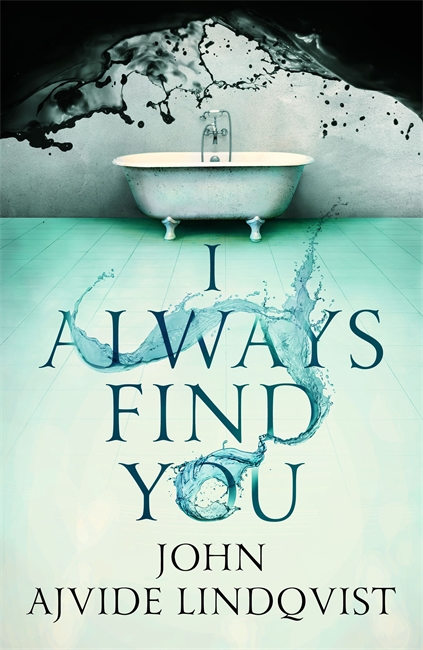
Horror Autofiction? "I Always Find You" by John Ajvide Lindqvist


Horror Autofiction - "I Always Find You" by John Ajvide Lindqvist


A review


Some years back I had enjoyed - with some reservations - Lindqvist's first and best novel "Let the Right One In". It was that which led me to try his latest book to be published in English (in a translation by Marlaine Delargy) - I Always Find You - the second instalment in the "Places" trilogy. Unfortunately, it left me with a sour taste, a reminder that in-your-face horror is, alas, not for me... Which, of course, does not mean that there's not much for others to enjoy in this book. 

Lindqvist has often been compared to Stephen King and one can see certain parallels with the American master of horror. Lindqvist is as much concerned with the realist/social aspects of his story as with the supernatural ones. In this case, the protagonist-narrator is a fictionalised version of the author himself, who is recalling events which occurred in 1985, as well as a disturbing incident from some years before that. In the mid-80s, the narrator/author was just 19 years old and starting out as a young showman/magician. He moves into a small and decrepit flat in a run-down apartment complex in Stockholm and the 'horrors' he has to face are the very real daily challenges faced as a teenager coming to terms with adult life. A novel does not need to go far back to count as convincing historical fiction and, in this case, judiciously-placed cultural and historical references (Depeche Mode, skinheads, the assassination of Olof Palme) take us, very effectively, back to 80s Stockholm. One also gets the impression that mixed with the distaste for the sordidness which city life could bring, there's also a vague sense of nostalgia.

The supernatural elements start, literally, with drainage problems. The apartment condomini share a communal laundry and bathroom and, out of the blue, an out-of-order sign appears on the bathroom door. Soon after, cataclysmic and ominous signs manifest themselves - birds fall out of the sky, John suffers from a constant claustrophobic feeling and the neighbours start behaving strangely. And the bathroom seems to beckon.

What follows is hard to describe without giving away much of the plot. And so I will leave any intrigued readers to discover for themselves the strangeness which lurks in the cover's bathtub. Suffice it to say that it is both splendid and bizarre, and evidence of the author's wild flights of the imagination. However, it also leads to some bloody and, at least to me, repulsive scenes and it is here that the book started to lose me. 

Lindqvist manages to give even the more outlandish aspects of his book a social and political underpinning. It is an interesting approach even it sometimes gives rise to rather preachy monologues. 

Overall, a mixed bag, which gives a horror twist to the "autofiction" genre.


Published September 20th 2018 by riverrun


Friday, 21 September 2018

The Seasons


The Seasons


Walter Crane (1845-1915) The Masque of the Four Seasons


We are but dreams. Our
children walk the sun-kissed land,
honey on their lips.

***

The shimmering earth
beckons, ripe and languorous;
fire at its heart.

***

Your tear-speckled eyes
Capture the slate-coloured skies.
Soon, the rain will fall.

***

Shivering trees stoop,
naked in the leaden air.
The year has grown old.


Latest post

Servants to the King by Marion Scott